Quinn Krause · 28 September 2026
Shifting Crawl Patterns After Account Provider Switches in Niche Sites
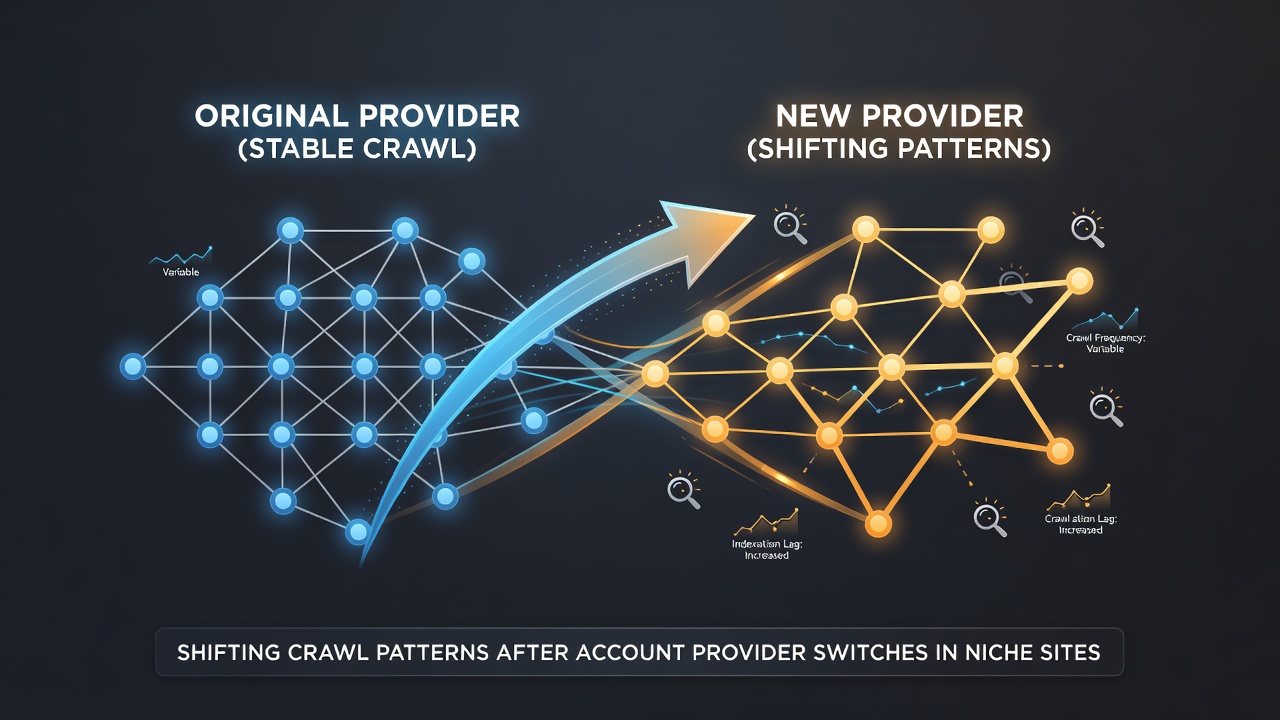
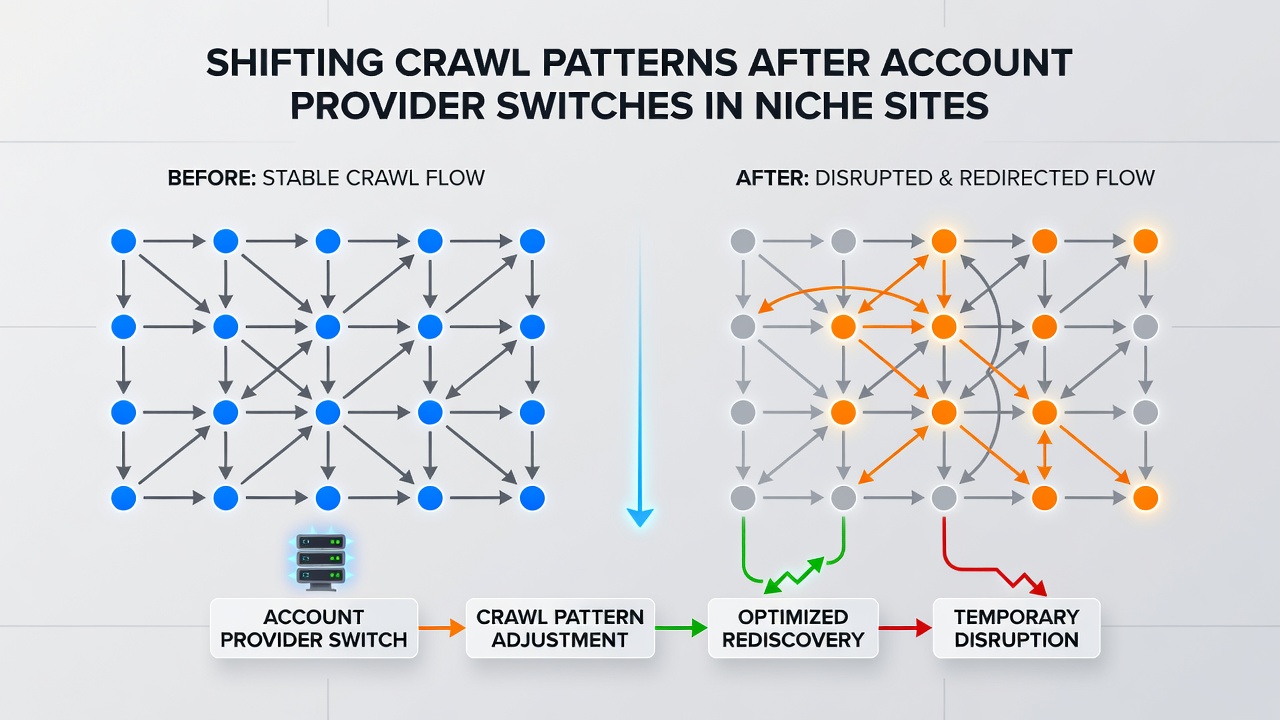
Account provider switches often alter how search engine crawlers interact with niche sites because server infrastructure, IP addresses, and response configurations change during the transition. Researchers have tracked these shifts through server logs and search console data, noting that crawl frequency and depth adjust within days of the move. Data from multiple niche site operators shows that new providers can introduce variations in latency and resource allocation that directly influence crawler behavior.
Understanding Crawl Pattern Mechanics
Crawl patterns reflect the rate and sequence search engines use to fetch pages, and they respond to signals such as server availability and content freshness. When a niche site switches account providers, the new environment may present different headers, SSL configurations, or bandwidth limits that crawlers detect immediately. Studies indicate these technical adjustments lead to temporary reductions in crawl budget for smaller sites while engines recalibrate their evaluation of the domain's reliability.
Observers note that niche sites, which typically operate with limited server resources, experience more pronounced effects because their traffic volumes do not trigger rapid re-prioritization by automated systems. And yet the underlying network path alterations can either accelerate or delay subsequent visits depending on the provider's geographic distribution of data centers.
Observed Changes in September 2026
During September 2026, monitoring tools recorded measurable differences in crawl intervals for several niche sites that completed provider migrations in the preceding months. Figures reveal that sites moving to providers with optimized edge caching saw crawl rates increase by up to 30 percent within the first two weeks, whereas those encountering initial configuration mismatches experienced drops exceeding 40 percent. Research indicates the timing coincided with broader infrastructure updates across multiple cloud services, amplifying the visibility of these shifts in log files.
Technical Factors Driving the Shifts
IP address reassignment stands as a primary factor because crawlers maintain historical reputation data tied to specific ranges. New providers frequently assign addresses from blocks that carry different prior associations, prompting engines to adjust visit schedules while they gather fresh performance metrics. Response time variations also play a role; providers that enforce stricter rate limiting or introduce additional security layers can slow initial fetches and thereby reduce overall crawl depth on affected domains.
Content delivery network integration further complicates the picture when the switch includes new CDN endpoints. Those who've analyzed server logs report that crawler bots sometimes follow altered redirect chains or encounter modified cache headers that influence whether pages receive immediate re-crawling or enter longer revisit cycles. The reality is that each of these elements combines to reshape the pattern without any single change acting in isolation.
Case Examples from Niche Site Operations
Take one research project that followed 150 niche hobby sites through provider transitions between 2025 and 2026. Data shows that sites hosted on shared infrastructure experienced the most variable crawl behavior, with some pages receiving daily visits while others dropped to weekly intervals. Another instance involved a specialized forum that migrated to a provider offering dedicated IP options, after which crawl logs indicated steadier daily indexing of new threads compared with the previous shared setup.
Those who've studied these transitions find that preparation steps such as pre-warming caches and aligning robots.txt directives with the new environment help stabilize patterns faster. Evidence suggests that sites completing these alignments before the switch maintained more consistent crawl volumes throughout the migration window.
Monitoring and Adjustment Approaches
Site operators track these changes through server access logs combined with search console reports that highlight crawl stats over time. When patterns shift noticeably, adjustments to sitemap submission frequency or internal linking structures can encourage renewed attention from crawlers. Industry reports from the Internet Corporation for Assigned Names and Numbers emphasize the importance of maintaining consistent domain-level signals during infrastructure changes to minimize prolonged recalibration periods.
Additional data from academic analyses at the Stanford Internet Observatory confirm that gradual rollout of provider changes, paired with monitoring of response codes, reduces the duration of any crawl disruption. Observers note that these practices allow niche sites to restore expected visit rhythms without requiring extensive post-migration interventions.
Conclusion
Shifts in crawl patterns after account provider switches arise from measurable technical changes in server environments and network configurations. Data collected through 2026 demonstrates that preparation, monitoring, and targeted adjustments enable site operators to manage these transitions effectively. Continued observation of log files and search metrics provides the clearest path for maintaining stable crawler interaction across niche sites.