Quinn Krause · 14 September 2026
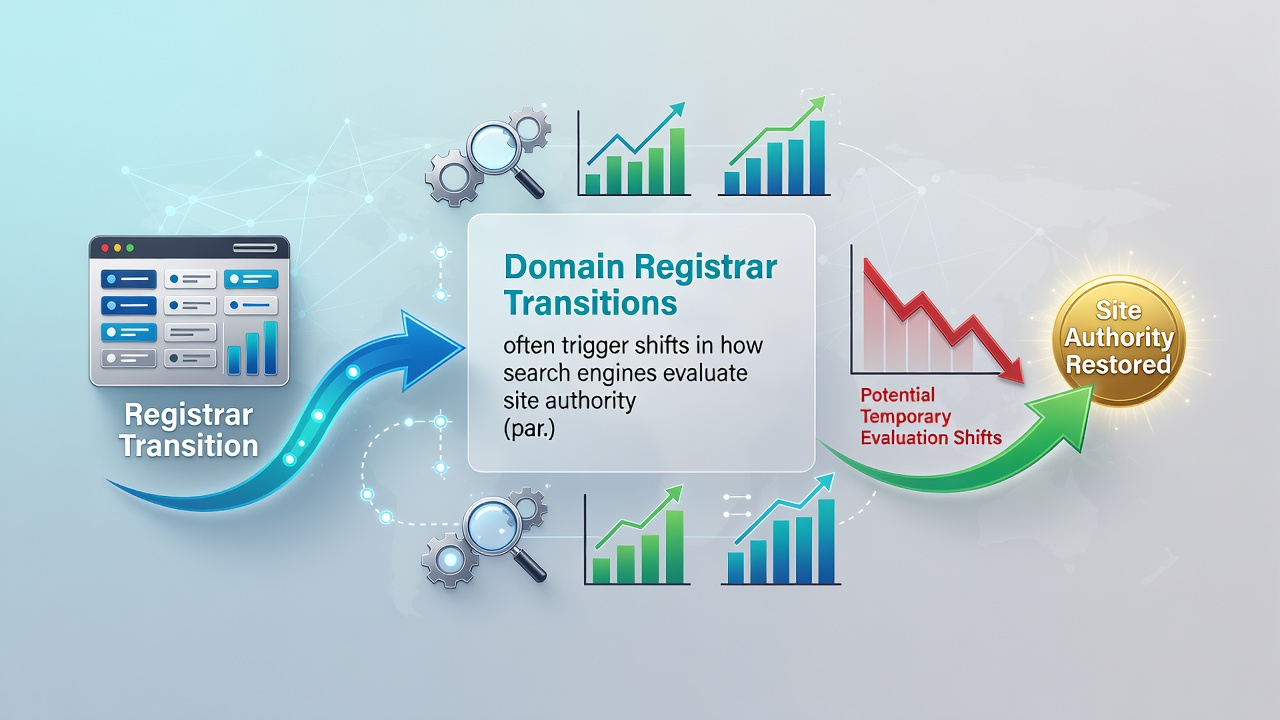
Domain Registrar Transitions Often Trigger Shifts in Search Engine Site Authority Evaluation
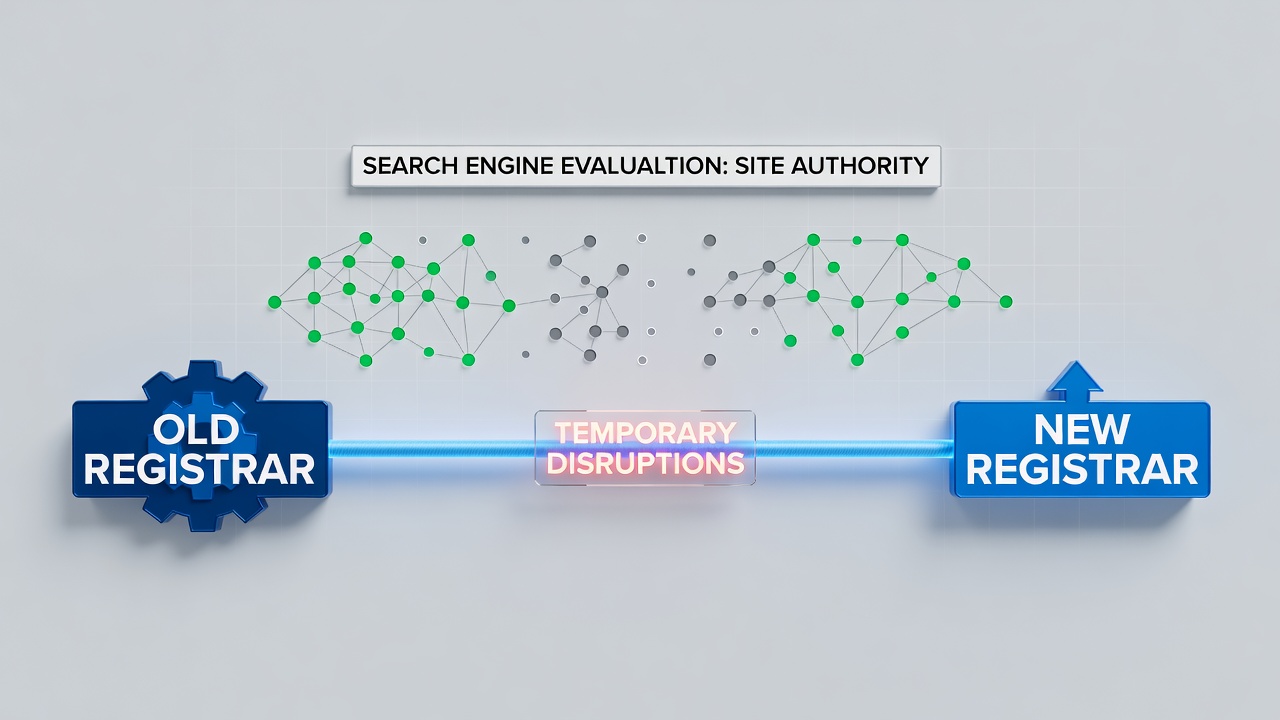
Domain registrar transitions represent a common administrative process that site operators undertake for various operational reasons, and these changes frequently intersect with how search engines assess site authority through backlink profiles. When a domain moves between registrars, the underlying registration data updates occur alongside potential DNS configuration adjustments, which can introduce brief periods where crawlers encounter altered signals or delayed resolutions that affect link evaluation continuity.
Mechanics of Registrar Transfers and Their Technical Footprint
Transfers between registrars follow standardized protocols established by ICANN, where the process requires authorization codes and confirmation steps that typically span several days while the domain remains under the original registrar until completion. During this window, DNS records stay intact yet propagation delays across global networks sometimes arise, leading to scenarios where search engine bots receive inconsistent responses from name servers located in different regions. Observers note that these inconsistencies rarely alter the core domain ownership but can coincide with temporary indexing fluctuations when backlink crawlers attempt to verify link destinations and encounter variable latency.
Backlink profiles themselves consist of external references that point to specific URLs, and search engines evaluate these connections based on factors including anchor text relevance, linking site quality, and the stability of the target domain's resolution. A registrar shift does not inherently modify the backlink graph, yet the associated DNS refresh cycles introduce variables that algorithms must reconcile before restoring full authority weighting. Research indicates that sites undergoing such transitions often experience brief ranking plateaus rather than permanent losses, particularly when the move completes without extended downtime.
Backlink Continuity During Transitional Periods
Link evaluation algorithms prioritize historical patterns and current accessibility, so temporary disruptions in domain resolution can delay the refresh of authority metrics until crawlers reprocess the affected pages. Those who manage large portfolios report that monitoring tools sometimes flag minor drops in indexed backlink counts during the first forty-eight hours post-transfer, though these counts typically rebound once full propagation occurs across major search engine infrastructures. The ball remains in the site operator's court to verify that no registrar-specific settings inadvertently alter URL canonicalization or introduce redirect chains that complicate link attribution.
What's interesting is how search engines distinguish between registrar-initiated changes and deliberate manipulations, since the former arise from routine business decisions while the latter often involve bulk acquisitions or artificial link networks. Data from industry reports shows that most transitions resolve cleanly when operators maintain consistent nameserver configurations throughout the process, preserving the pathways that crawlers use to traverse and validate backlinks. And yet, cases exist where legacy DNS entries at the prior registrar create residual conflicts that extend the period of uncertainty by several additional days.
Observed Patterns in Authority Signal Recovery
Studies conducted by researchers at various academic institutions have examined registrar change datasets and found correlations between transfer timing and short-term authority metric adjustments, especially for sites with extensive international backlink distributions. These patterns emerge because crawlers operating from different geographic vantage points may encounter the updated registrar records at staggered intervals, creating asynchronous updates to the link graph that algorithms later consolidate. Evidence suggests that sites with diversified link sources recover faster than those reliant on regional clusters, since broader geographic distribution reduces the impact of any single propagation delay.
September 2026 marks the scheduled implementation of updated ICANN registrar accreditation rules that introduce enhanced verification requirements during transfers, which may further standardize the process and reduce edge-case disruptions. Operators preparing for future moves can reference these forthcoming guidelines alongside current procedures to minimize exposure. External resources such as the ICANN domain transfer documentation outline the precise sequence of steps and expected timelines that influence technical continuity.
Practical Considerations for Maintaining Link Integrity
Site administrators often coordinate transfers during low-traffic windows and maintain duplicate DNS setups at both registrars until full propagation confirms stability. This approach limits the window during which backlink verification encounters interruptions, allowing search engines to continue processing authority signals without extended gaps. Those who've studied large-scale migrations note that pre-transfer audits of nameserver delegations and post-transfer validation of resolution paths serve as effective safeguards against compounding factors that might otherwise amplify minor disruptions.
Additional monitoring through server logs and third-party crawling services provides visibility into how frequently bots revisit the domain during and after the transition, revealing whether authority recalculation aligns with expected recovery timelines. Academic analyses of similar events have documented that consistent historical backlink velocity usually outweighs isolated access anomalies, enabling most sites to regain prior evaluation levels within one to two indexing cycles.
Conclusion
Domain registrar transitions introduce measurable variables into the technical environment that search engines use to assess site authority, particularly through the lens of backlink profile stability during brief transitional phases. The process follows established protocols that prioritize continuity, and operators who manage DNS and verification steps carefully observe that authority signals typically stabilize without lasting effects. Ongoing refinements to registrar policies, including those slated for September 2026, continue to shape how these administrative changes intersect with search evaluation frameworks.